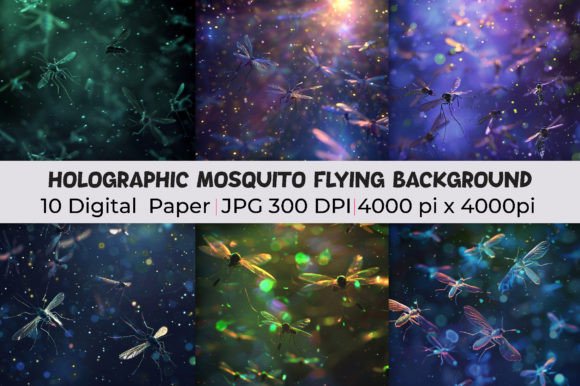
Holographic Mosquito Flying Backgrounds: A New Creative Dimension
There’s a specific kind of energy that comes from movement and light. It’s the shimmer of a soap bubble, the iridescence on a beetle’s wing, the quick, darting motion of an insect in the sun. Capturing that fleeting, dynamic quality is a challenge for any designer. Static images often fall flat, lacking the life and dimension that make a viewer stop and look. This is precisely the space where Holographic Mosquito Flying Backgrounds find their purpose, offering a unique blend of organic motion and digital artistry.
This collection isn't just a set of pretty pictures. It’s a toolkit for creating depth. Imagine the delicate, almost translucent wings of a mosquito, but rendered in a spectrum of shifting, vibrant hues—electric blues, deep magentas, and iridescent greens. The backgrounds capture this essence, presenting intricate details and a sense of kinetic energy against a clean or subtly textured backdrop. The style is modern, slightly surreal, and inherently sophisticated. It speaks to a design sensibility that appreciates the beauty in the microscopic and the power of holographic effects. For a designer, this is less a background and more a foundational element for a story.
Practical Applications for Dynamic Design Assets
The real value of any design asset lies in its versatility. Where does a background with such a distinct personality actually work? The applications are broader than you might initially think, extending across both digital and print realms.
In web design, these backgrounds can transform a hero section from a static image into a captivating entry point. A slow, subtle animation overlaying the static holographic elements can create a mesmerizing first impression for a tech startup, a beauty brand, or a digital artist's portfolio. For social media graphics, the high-resolution 4000x4000 pixel files are perfect for creating thumb-stopping Instagram posts, YouTube thumbnails, or Pinterest pins that stand out in a crowded feed. The vibrant colors ensure visibility, while the intricate details reward a closer look.
Beyond the screen, consider packaging design. A product box for a premium cosmetics item, a special edition book cover, or luxury stationery could use a cropped section of these backgrounds to add an immediate sense of innovation and high-end appeal. In editorial design, a magazine spread about future trends or biotechnology could use these images as full-bleed pages or as accent panels, instantly setting a thematic tone. For entrepreneurs and small business owners, incorporating these backgrounds into presentation decks, webinar banners, or digital product mockups can elevate the perceived professionalism and creativity of their brand.
Integrating Holographic Elements with Your Existing Toolkit
Introducing a powerful new element into a project requires a strategic approach. The goal is enhancement, not overwhelm. Here’s how to think about pairing and using these backgrounds effectively.
First, consider your font pairing. A holographic background is visually complex. Pairing it with a clean, geometric sans serif font for body text ensures readability. For headlines, you have more room to play. A bold, modern display font can create a striking contrast, while a simple serif font might add an unexpected touch of classic elegance. Avoid highly decorative script fonts or busy handwritten fonts for primary text, as they can compete with the background's detail. The background should support your visual hierarchy, not fight it.
Think about brand identity and perception. Using these backgrounds consistently in your marketing materials can help position a brand as forward-thinking, innovative, and creative. It’s a visual shorthand for modernity. For a logo design project, the background could be used in the brand's style guide or in hero imagery, with the logo itself designed in a solid, contrasting color to remain clear and recognizable.
Finally, always test. The provided JPG images are a fantastic starting point. Crop them, adjust the saturation, overlay text with semi-transparent boxes, or blend them with solid colors from your palette. The best results often come from treating these design assets as ingredients rather than finished meals. By thoughtfully integrating this creative font of visual texture, you add a layer of sophistication and depth that truly elevates a project from good to memorable.