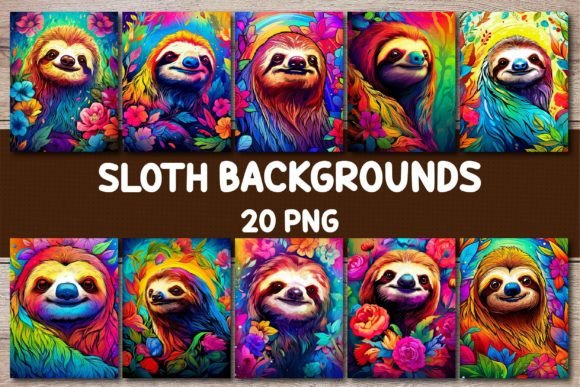
Sloth Backgrounds for Covers: A Designer’s Guide to Whimsical Design Assets
Cultivating Calm in a Busy Creative Market
In the saturated world of self-publishing and digital design, capturing a viewer's attention is only half the battle; keeping it requires a specific emotional resonance. When we look at the current trends in adult coloring books and relaxation products, there is a distinct shift toward organic, nature-inspired aesthetics. This is where Sloth Backgrounds for Covers enters the conversation, offering a unique blend of whimsy and tranquility that stands out against sharper, more aggressive graphic trends.
These aren't just cute animal drawings; they are carefully curated design assets intended to evoke a specific mood. The visual style is rooted in a soft, approachable aesthetic. We are seeing a collection of 20 distinct scenes featuring sloths in various poses—from hanging lazily on branches to curling up with a book. The appeal lies in the "personality" of the illustrations. They communicate a sense of slow living and mindfulness, which aligns perfectly with the current cultural demand for stress relief and art therapy materials. For a designer or publisher, this thematic consistency is invaluable. It allows you to build a cohesive brand identity for a series of products without needing to reinvent the wheel for every new release.
Technical Specifications: Ensuring Professional Polish
While the artistic style sets the mood, the technical execution determines the usability of these assets. A common pitfall in sourcing digital paper and illustrations is compromising on quality, which can lead to pixelation or color banding in the final print. The Sloth Backgrounds for Covers collection addresses this by providing files at 300 DPI in PNG format.
For those unfamiliar with the technical nuances of print design, 300 DPI (dots per inch) is the industry standard for high-resolution printing. This ensures that the intricate details of the sloth fur and the textures of the background elements remain crisp and clear, whether you are printing a small booklet or a large Amazon Kindle Direct Publishing (KDP) cover. The PNG format is equally critical. Unlike JPEGs, PNGs support transparency, allowing you to layer these backgrounds over other elements or use them on colored paper without ugly white boxes surrounding the image. This flexibility is essential for graphic design professionals who need to manipulate assets to fit specific layouts.
Strategic Applications: Beyond the Coloring Book
While the primary use case is evident—creating covers for KDP coloring books—the versatility of these backgrounds extends much further. Thinking creatively about how to deploy these high-quality coloring backgrounds can open up new revenue streams and marketing channels.
- Editorial and Packaging Design: If you are a small business owner selling handmade soaps, teas, or wellness products, these sloth illustrations can add a touch of charm to your packaging design. The soft, organic lines of the sloths complement products that emphasize natural ingredients and relaxation.
- Social Media Graphics and Web Design: In the digital space, standing out on a crowded feed is difficult. These backgrounds work exceptionally well for social media graphics. Imagine using a sloth background for a "Take it Easy Tuesday" post or as a background for quote cards related to mental health. The visual hierarchy is naturally established by the distinct character of the sloth, allowing you to overlay text using a clean sans serif font for maximum readability.
- Brand Identity for Coaches and Therapists: For life coaches, therapists, or yoga instructors, brand identity needs to communicate safety and calm. These backgrounds can be used for digital workbooks, client onboarding documents, or website headers. The imagery subtly reinforces the brand message of patience and mindfulness without being overly clinical.
Design Principles: Pairing and Hierarchy
Using a busy or illustrative background presents a common design challenge: maintaining readability. If you overlay text on a detailed sloth scene, you risk the text getting lost in the noise. This is where understanding visual hierarchy becomes crucial.
When working with Sloth Backgrounds for Covers, I recommend using a font pairing strategy that contrasts the organic nature of the illustration. Because the backgrounds are illustrative and likely have a "hand-drawn" or "whimsical" feel, pairing them with a highly structured serif font or a bold sans serif font creates a pleasing tension. Avoid using overly decorative script fonts or handwritten fonts for the main title, as this can create visual clutter. Instead, use a bold, clean typeface for the title to anchor the design, and perhaps a lighter weight for subtitles.
Furthermore, consider the use of "knockout" text or semi-transparent overlays. Since the backgrounds are provided in high resolution, you can afford to darken the image slightly or place a white box behind your text to ensure the legibility remains professional. This technique is standard in editorial design and ensures that your final product—whether a book cover or a flyer—looks polished and intentional.
Evaluating Fit and Commercial Utility
Before integrating any asset into a project, it is vital to evaluate the fit. Not every project requires a cute animal; however, for the right niche, Sloth Backgrounds for Covers are a powerful tool. The collection is particularly effective for audiences ranging from children to adults, given the universal appeal of the subject matter.
For entrepreneurs and marketers, the commercial aspect is just as important as the aesthetic. These assets are designed to be used in commercial products, such as printable designs sold on Etsy or physical books sold on Amazon. When selecting these backgrounds, you are investing in a massive bundle design potential. A single purchase of 20 variations allows you to create a cohesive series of products—Volume 1, Volume 2, etc.—which is a proven strategy for increasing customer lifetime value in the publishing market.
Ultimately, the goal is to create products that facilitate creative expression. By using these backgrounds, you are providing a canvas that invites the user to slow down, pick up their colored pencils, and engage in mindful coloring. Whether you are a content creator looking for unique visuals or a publisher aiming to dominate the adult coloring book category, these assets provide the perfect foundation for success. They bridge the gap between digital print technology and the timeless human need for artistic relaxation.